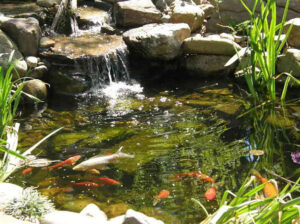

When an arctic blast sweeps through the Charlotte area, pond owners often wake up to find their beloved water feature transformed into a sheet of ice. While a frozen pond can look stunning on a crisp winter morning, it can also create serious problems for your fish and the overall health of your pond ecosystem. Knowing how to respond quickly and safely can mean the difference between a minor inconvenience and a major crisis.
Here in the Piedmont region of North Carolina, we typically experience mild winters with occasional hard freezes. Unlike northern states where ponds may stay frozen for months, our freeze-thaw cycles create unique challenges. Your pond might freeze overnight, thaw by afternoon, and freeze again the next evening. This guide will help you protect your fish and maintain a healthy pond through whatever winter weather comes our way.
Why a Frozen Pond Is Dangerous for Fish
When ice completely seals your pond, it creates a closed system that can quickly become toxic for your koi, goldfish, or other pond inhabitants. Understanding why this happens will help you appreciate the urgency of maintaining an opening in the ice.
Gas Exchange Stops: Your pond is a living ecosystem where fish, plants, and beneficial bacteria are constantly producing gases. Fish release carbon dioxide as they breathe, and decomposing organic matter at the bottom of your pond produces hydrogen sulfide and other potentially harmful gases. Under normal conditions, these gases escape into the atmosphere while fresh oxygen enters the water. When ice seals the surface, this critical exchange stops completely.
Oxygen Depletion: Fish need dissolved oxygen to survive. While koi and goldfish can tolerate lower oxygen levels in cold water (since their metabolism slows dramatically), they still require some oxygen to stay alive. A completely sealed pond will slowly lose its oxygen content as fish continue to breathe and bacteria continue to work. In severe cases, this can lead to a “winter kill” where fish suffocate under the ice.
Toxic Gas Buildup: Perhaps even more dangerous than oxygen depletion is the accumulation of harmful gases. Carbon dioxide, ammonia, and hydrogen sulfide can build up to lethal levels when they have no way to escape. Even if your fish survive for a few days under the ice, prolonged exposure to these gases can cause stress, illness, and eventually death.
The Safe Way to Create an Opening in the Ice
If you discover your pond has frozen over, don’t panic—but do act promptly. The safest and most effective method for creating an opening involves nothing more than boiling water from your kitchen.
Step 1: Boil water in a large pot or kettle. You’ll want enough water to melt through the ice, so a large stockpot works better than a small kettle for thick ice.
Step 2: Carefully carry the pot to your pond. Choose a spot near the edge of the pond where you can safely reach without stepping on the ice. If your pond has a waterfall or stream, creating an opening near this area can help with water circulation.
Step 3: Slowly pour the boiling water onto the ice. Focus on one area rather than spreading the water around. The concentrated heat will melt through the ice more effectively. You may need to repeat this process several times for thick ice.
Step 4: Monitor the opening. Once you’ve created a hole, check on it periodically. In ongoing cold weather, the opening will try to refreeze. You may need to repeat the hot water treatment every few hours until temperatures rise or you can implement a more permanent solution.
What NOT to Do: Why You Should Never Break the Ice
It might seem logical to grab a hammer, shovel, or heavy object and simply smash through the ice. After all, that’s the quickest way to create an opening, right? Unfortunately, this approach can be far more harmful to your fish than the frozen surface itself.
When you strike ice, the impact creates powerful shockwaves that travel through the water. Sound and vibration move efficiently through water—much more so than through air. What feels like a simple tap on the surface translates into a violent concussion underwater. Fish have sensitive lateral lines and internal organs that can be severely damaged by these vibrations.
Koi are particularly vulnerable because they often become torpid (a hibernation-like state) during cold weather. In this state, they rest near the bottom of the pond with slowed metabolism and reduced awareness. A sudden shock can cause internal injuries, burst swim bladders, or trigger fatal stress responses. Even if the damage isn’t immediately visible, stressed fish may develop infections or fail to recover when spring arrives.
The bottom line: patience with hot water is always better than the quick violence of breaking ice. Your fish will thank you.
Long-Term Solutions: De-Icers and Pond Aerators
While the boiling water method works well for occasional freezes, Charlotte pond owners who want reliable protection throughout winter should consider investing in equipment designed for the job. Two primary options can keep your pond safe without constant monitoring.
Floating Pond De-Icers: These electric devices float on the water surface and generate just enough heat to maintain a small ice-free zone. They don’t heat your entire pond—that would be wasteful and potentially harmful to dormant fish—but they keep a hole open for gas exchange. Most quality de-icers have thermostatic controls that turn them on only when temperatures drop below freezing, making them energy-efficient. For Charlotte’s climate, a de-icer rated for 100-300 gallons is typically sufficient for small to medium ponds, while larger water features may need multiple units or higher-wattage models.
Pond Aerators: Aerators serve double duty by oxygenating your water and preventing ice formation. These systems pump air through tubing to diffusers or air stones at the bottom of your pond. The rising bubbles create water circulation that makes it difficult for ice to form in that area. As a bonus, aerators improve oxygen levels year-round, which benefits fish health and helps control algae. For winter use, position the aerator in a shallow area rather than the deepest part of your pond—you want to avoid disrupting the warmer water layer where your fish are resting.
Many pond owners use both a de-icer and an aerator together for maximum protection. The de-icer ensures an opening remains even in the coldest temperatures, while the aerator maintains water quality and circulation.
Additional Winter Pond Care Tips for Charlotte Homeowners
Keeping an opening in the ice is crucial, but it’s just one part of winter pond maintenance. Here are additional steps to help your pond and fish thrive through the colder months.
Stop feeding when water temperatures drop below 50°F. Koi and goldfish can’t properly digest food in cold water. Any food they eat will sit in their digestive system and can cause bacterial infections. Their metabolism slows so dramatically in cold water that they don’t need food anyway—they live off stored body fat until spring. If you’re unsure about water temperature, invest in a simple pond thermometer.
Remove excess debris before hard freezes arrive. Leaves and organic matter that settle on the bottom of your pond will continue decomposing through winter, producing harmful gases. A fall clean-out or at least a thorough skimming before the coldest weather arrives reduces this problem significantly.
Keep your pump running if possible. Water movement helps prevent freezing and maintains beneficial bacteria colonies in your filtration system. However, if temperatures are expected to stay well below freezing for extended periods, you may need to bring your pump indoors to prevent damage from ice formation in the lines.
Don’t worry too much about your fish. This might sound counterintuitive after everything we’ve discussed, but healthy koi and goldfish are remarkably cold-hardy. As long as your pond is deep enough (at least 2-3 feet in the Charlotte area) and maintains some opening for gas exchange, your fish should survive winter just fine. They’ve been doing it for thousands of years.
When to Call a Professional
While most winter pond situations can be handled with the tips above, some circumstances warrant professional help. Contact a pond professional if you notice fish at the surface gasping for air (a sign of severe oxygen depletion), if you see dead fish after a prolonged freeze, if your pump or filtration system has failed, or if you’re concerned about the overall health of your pond ecosystem.
At Hoaglandscape, we’ve helped Charlotte-area pond owners navigate winter challenges for over two decades. Whether you need emergency assistance, want to install a de-icer system, or are planning ahead for next winter with a proper pond design, we’re here to help. A well-designed pond with adequate depth and proper equipment makes winter care almost effortless.
Stay Prepared, Stay Calm
Charlotte winters are generally mild, but those occasional arctic blasts can catch pond owners off guard. The key is preparation: have a de-icer or aerator on hand before you need it, keep a large pot ready for emergency hot water treatments, and resist the urge to break the ice no matter how tempting it might be.
Your pond is a resilient ecosystem. With just a little attention during freezing weather, your fish will come through winter healthy and ready to greet you when warmer days return.
Need help preparing your pond for winter or recovering from freeze damage? Contact Hoaglandscape at 980-522-6166 or visit hoaglandscape.com/contact to schedule a consultation. We proudly serve Charlotte, Belmont, Gastonia, Lake Norman, Lake Wylie, and surrounding areas.