
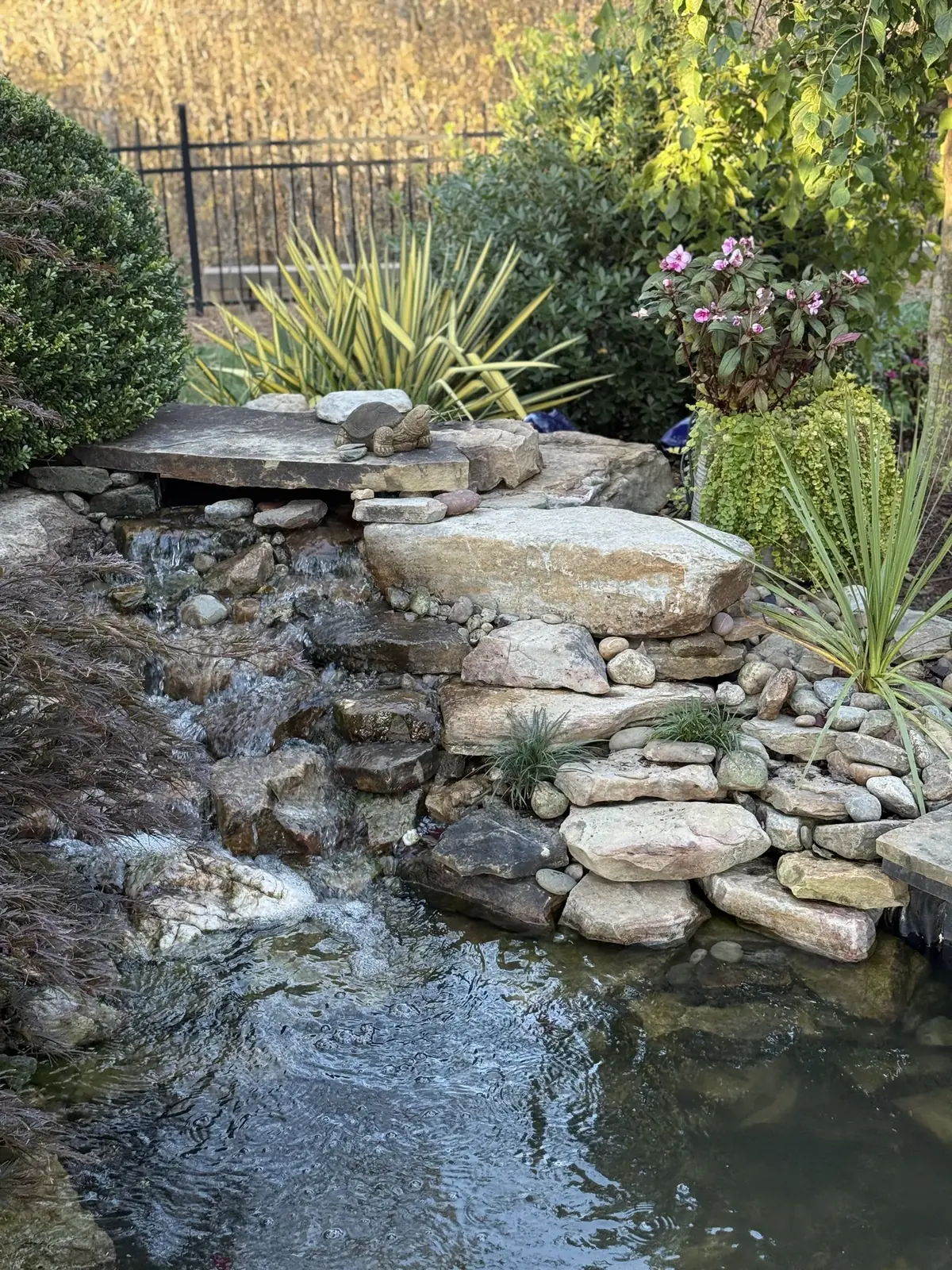
Pond Repair in Charlotte
Losing water, a pump that quit, a waterfall that leaks or algae that will not quit. We find the cause, fix it properly and tell you honestly whether the pond is worth repairing.
Not sure what you need? Answer three quick questions
- Master Certified Aquascape Contractor since 2009
- BBB A+
- Free phone consultations
- State licensed and insured
Get started
Pond repair that starts with the real cause
Most pond problems show up as a symptom: the water level drops, the waterfall slows to a trickle, the water turns green. The repair only lasts if you fix what is behind the symptom.
Hoaglandscape has handled pond repair in Charlotte, Belmont, Gastonia and the lake communities since 2002. As a Master Certified Aquascape Contractor, we know how a pond should be built, which makes it much easier to see where one went wrong.
Pond problems we repair
- Leaks
- Failing pumps
- Liner damage
- Collapsed edges
- Waterfall and stream leaks
- Skimmer and biofalls problems
- Algae that will not quit
Leaks. One of the most common reasons people call us. Many leaks are not a hole in the liner at all. They are a low spot in the edge, a waterfall or stream that lets water escape behind the rocks, or a loose plumbing fitting. We find the real one before anything gets torn out.
Failing pumps. Weak flow, a humming pump that does not move water, or a pump that trips the GFCI. Sometimes it is a clogged intake or a worn impeller. Sometimes the pump is simply the wrong size for the waterfall. We repair, replace or resize as needed.
Liner damage. Tree roots, burrowing animals, a shovel during planting, or rocks set on bare liner with no underlayment. Small punctures can often be patched. A liner that is brittle or torn in several places is usually better replaced.
Collapsed or sunken edges. When the soil under the edge settles, a section of the rim drops below the water line and the pond drains down to that height. In Piedmont red clay, edges that were not compacted well tend to settle over time.
Waterfall and stream leaks. The rocks shift, the liner under them settles, or water finds its way behind a stone instead of over it. Bib liners and proper foaming keep water moving forward, and when they are missing the leak usually follows.
Skimmer and biofalls problems. A cracked skimmer, a stuck weir door, a biofalls that has settled out of level, or filter media that has fallen apart. These parts are the pond's filtration, so when they fail, water quality follows.
Algae that will not quit. String algae and green water that return no matter what you add are usually a filtration problem. We look at circulation, the biological filter and the plant load, and often add an IonGen to keep string algae down.
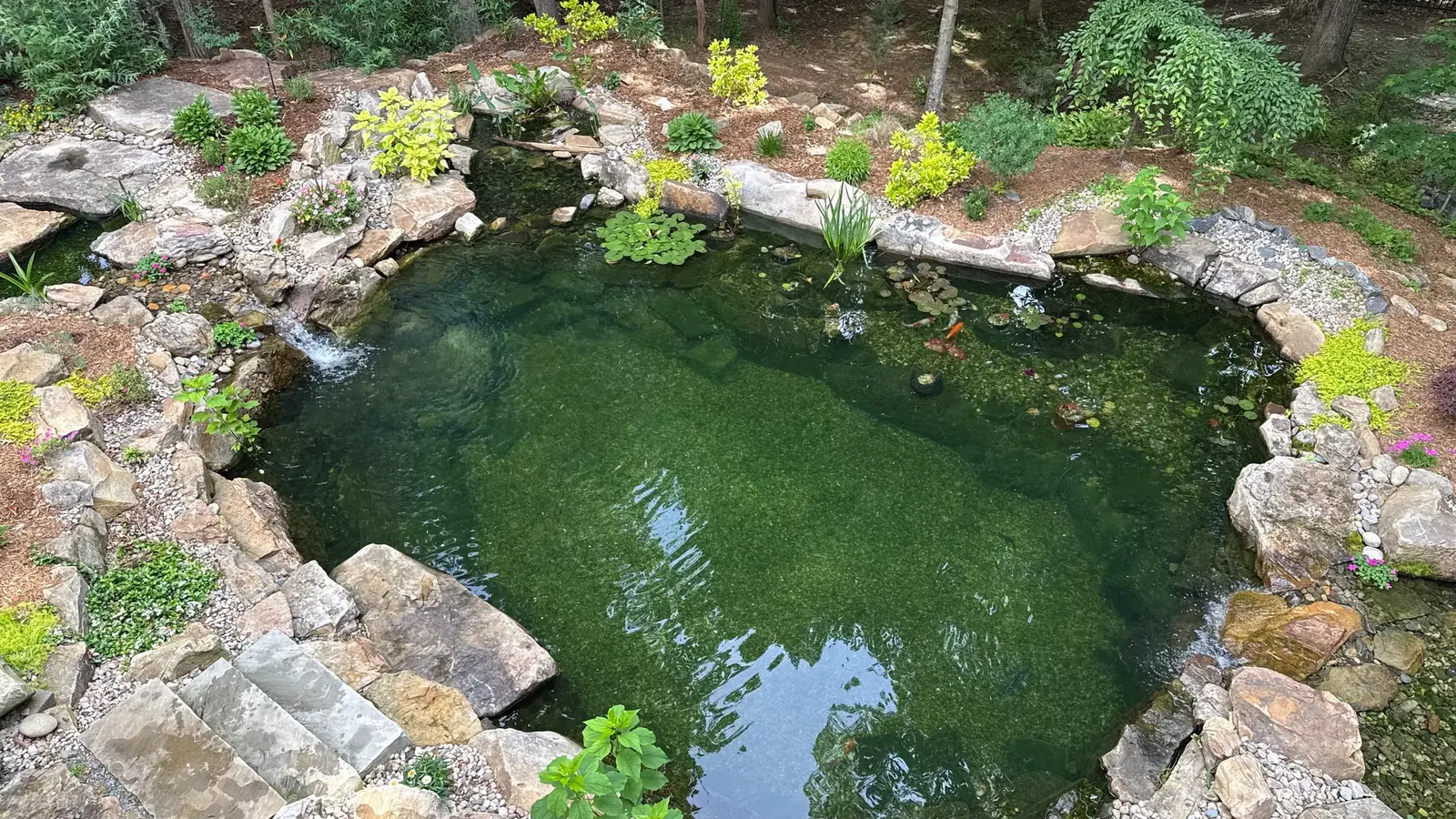
How we find a pond leak
Leak detection is a process of elimination. You can start the first two steps yourself.
Step 1: Rule out normal evaporation
Every pond loses water to evaporation, and in a hot, windy Charlotte July a pond with a big waterfall can lose a noticeable amount. The simple check is a bucket test. Set a bucket of water on the pond's edge or on a step in the shallow area, fill it to match the pond's level, and mark both. After a day or two, compare. If the pond dropped about the same as the bucket, that is evaporation. If the pond dropped much more, you have a leak.
Step 2: Isolate the waterfall and stream from the basin
Next, turn off the pump and let the pond sit. If the water level stops dropping, the leak is in the waterfall, the stream or the plumbing that feeds them, which is good news, because those are the easiest areas to fix. If the level keeps falling with the pump off, the leak is in the pond basin itself.
Step 3: Find the level where it stops
With the pump off, a leak in the basin drains the pond down to the height of the leak and then stops. That line narrows the search to a band around the pond, and we work along it looking for a low edge, a puncture or a fold in the liner.
Step 4: Inspect the edges, plumbing and liner
We check the rim for low spots, the skimmer and biofalls connections for loose fittings, and the liner for punctures and root damage. In waterfalls we pull back rocks where water may be running behind the liner. Then we fix it and confirm the level holds.
Process
Repair or rebuild?
Not every pond is worth repairing. If the liner is cracked in many places, the edges have collapsed all the way around, or the pond was built without a skimmer and biological filtration, patching it usually means paying for the same repair again next year.
When we look at a pond, we give you a straight answer: what a repair would fix, what it would not, and when a rebuild or pond renovation makes more sense. Sometimes the best answer is a different water feature entirely, like a pondless waterfall, which keeps the sound of water with far less upkeep. For a deeper look at the decision, read how to decide whether to repair or rebuild your pond.
Process
We repair ponds we did not build
We regularly work on ponds built by someone else: a previous owner, a DIY project, or a contractor who is no longer around. One example: a Belmont family bought a home that came with a leaking 25-foot pondless waterfall. Roots had grown through the old liner and the streambed had tilted the wrong way. We tore it out, re-graded the stream, put down two layers of underlayment under a new liner and rebuilt three falls. See how we restored that 25-foot waterfall in two days.
Pricing
What drives the cost of pond repair
We do not publish repair prices, because two leaks that look the same from the patio can be very different jobs. Here is what moves the number:
- Where the problem is. A leak in the waterfall or a loose fitting is usually quicker to fix than one in the basin, which may mean draining the pond and moving fish.
- Access. Narrow side yards, steep slopes and tight spaces mean hand work instead of equipment, which takes longer.
- Whether fish need to be moved. Draining a koi pond means holding tanks and careful handling.
- Equipment. A repaired pump costs less than a replaced one, and a resized pump plus new plumbing costs more again.
- The condition of everything else. If we find the liner has no underlayment, or the edge has settled in several places, we will show you and let you decide what to fix now.
- Rock work. Resetting boulders in a waterfall is skilled, heavy labor, and big stones take time to place well.
We will explain what we found and what it will cost before we start the work.
Keep it from happening again
Many repairs we do could have been caught early: a low edge spotted during a spring cleanout, a pump checked before it failed, a skimmer cleared before it clogged. Our pond maintenance packages include a pump inspection and filtration service on every visit, and the spring cleanout is the best time to inspect the liner while it is exposed.
Spring planning
Book your spring cleanout early
Spring cleanout dates are booking now. Tell us about your pond today and we will get you on the spring schedule before the warm weather arrives.
Questions
Frequently asked questions
Do a bucket test. Set a bucket of water at the pond's edge, fill it to the same level as the pond, and mark both. After a day or two, compare the drop. If the pond lost about the same as the bucket, it is evaporation. If the pond lost noticeably more, you likely have a leak worth tracking down.
Often it is not a hole in the liner. Common culprits are low spots along the edge where soil has settled, waterfalls and streams where water escapes behind the rocks, and loose plumbing fittings. That is why we test with the pump off first. It tells us right away whether the leak is in the waterfall or the basin.
A small puncture in a liner that is otherwise in good shape can usually be patched. If the liner is brittle, cracked in several places, or was installed without underlayment and keeps getting punctured, replacement is the better investment. We tell you which it is after we have inspected it, not before.
Yes. Many of the ponds we repair were built by someone else or came with the house. We assess the construction as part of the visit, and if something in the original build is causing the problem, such as no skimmer, no underlayment or edges that were never compacted, we will tell you plainly.
Waterfalls and streams are the most leak-prone part of a pond. Rocks settle, the liner under them shifts, and water starts running behind a stone instead of over it. Missing bib liners or foam behind the falls make it worse. These leaks are usually fixable without touching the main pond.
Maybe, but check the simple things first. A full skimmer basket, clogged filter mats or debris in the intake will choke the flow from a healthy pump. If those are clear and flow is still weak, the impeller may be worn, the plumbing may be blocked, or the pump may be undersized for the waterfall.
It depends on where the problem is, how hard it is to reach, whether fish need to be moved and whether equipment needs to be replaced. A loose fitting and a basin leak are very different jobs. We do not guess over the phone. We find the cause first, then give you a clear price before any repair work starts.
Get started
Stop topping it off every morning.
Tell us what your pond is doing and we will find out why. Call 980-522-6166, Monday to Saturday, 8am to 6pm, or start below.
Brian, took a bad experience with my first contractor, and came to our rescue with beautiful results. Brian is a true artist, and knows his profession. Job well done, thank you.
Google review, 2023