
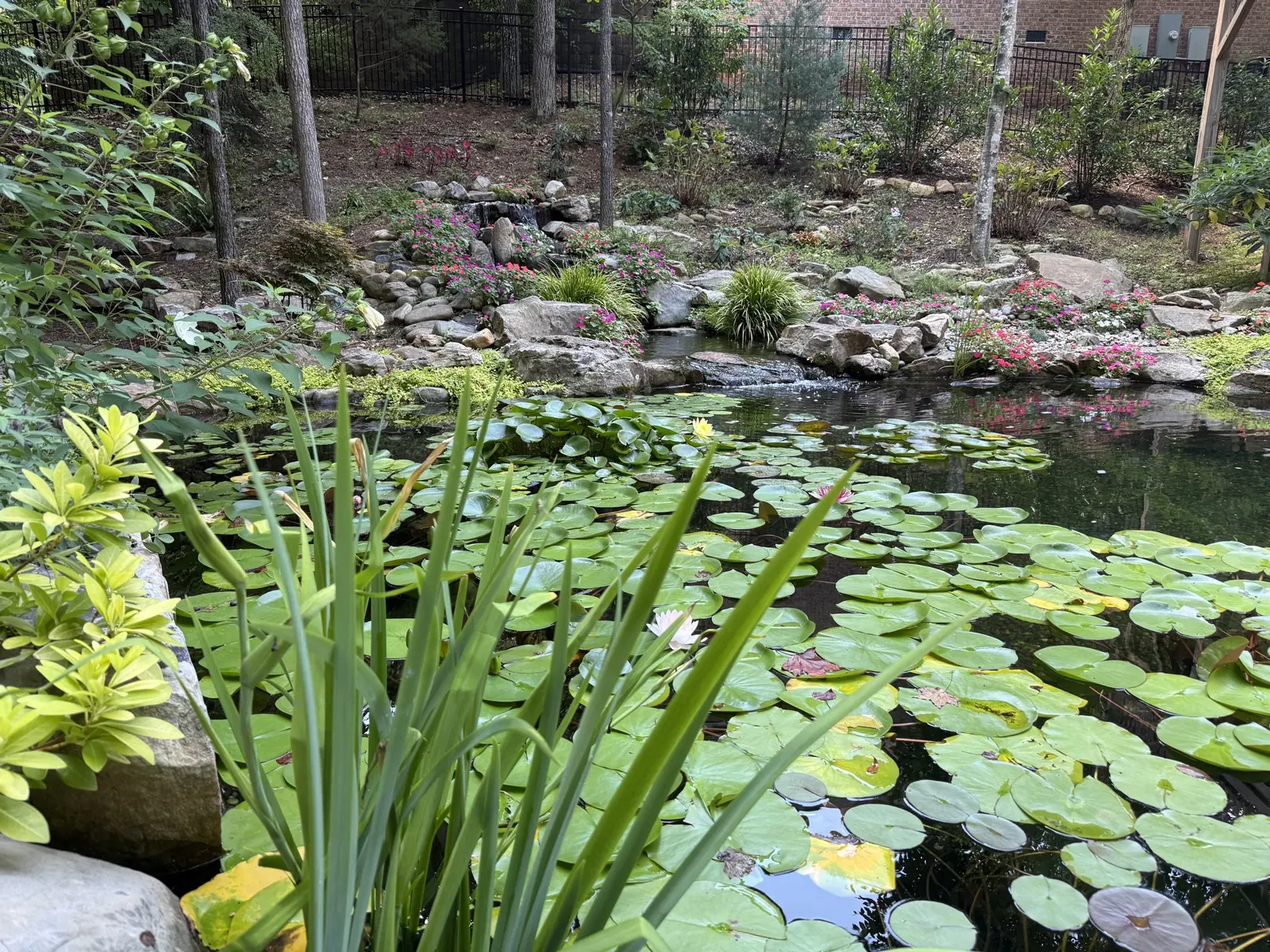
Natural Swim Ponds in Charlotte, NC
A natural swim pond is a swimming pool that cleans itself the way a healthy creek does: with gravel, plants and moving water instead of chlorine. Hoaglandscape designs and builds them for homeowners across Charlotte, Belmont, Gastonia, Lake Norman and Lake Wylie, and Brian Hoagland leads every project personally.
- Master Certified Aquascape Contractor since 2009
- BBB A+
- Building in the Charlotte region since 2002
- Headquartered in Belmont, NC
- State licensed and insured
Overview
What is a natural swim pond?
A natural swim pond (you will also hear natural swimming pool, natural pool, swimming pond, pond pool or organic pool) is a body of water built for swimming that stays clear through biology rather than chemistry. There is no chlorine, no salt cell and no shock treatment. The water is clean because the ecosystem around it is healthy.
Every natural swimming pool we build has two parts that work as one system:
The swim zone
Open water, deep enough for laps or an easy float, with clean footing and a defined way in and out.
The wetland filtration zone (sometimes called a regeneration zone)
A planted wetland of gravel and aquatic plants, connected to the swim zone, where the water is actually cleaned.
A swim pond is not a pool with plants set around it, and it is not a koi pond you are allowed to jump into. It is engineered from the first sketch for people in the water: the depth, the circulation, the size of the filter and the stone you stand on all follow from that. Industry builders sometimes call these recreational ponds, or rec ponds. They are the largest kind of water feature we build, with waterfalls and a wetland filter sized to match the swim area.
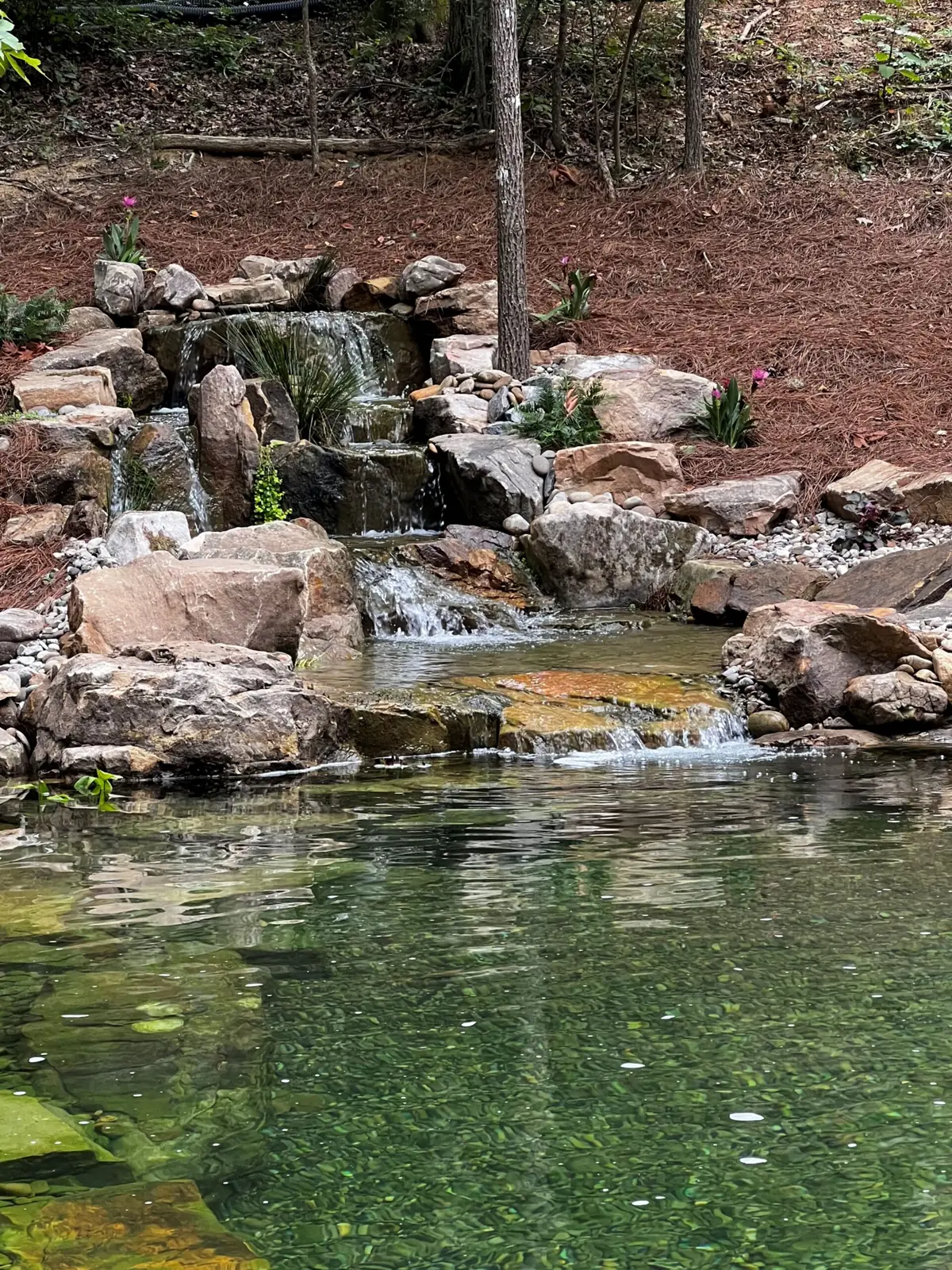
Filtration
How a natural swimming pool filters itself
This is the part most swimming pond contractors gloss over, and it is the part that decides whether you get clear water or a green pond. Here is what actually happens to the water in one of our eco-friendly ponds.
1. Circulation pulls the dirt to one place
Water never sits still. Jets set into the swim zone push the surface in one direction, steering leaves, pollen and floating debris toward an intake bay or skimmer at the far end. That is where the debris is caught, in one spot you can reach, instead of settling on the floor where swimmers walk. Constant movement also keeps oxygen in the water and gives mosquitoes no still water to breed in.
2. The pump sends water into the wetland filtration zone
From the intake, a pump moves water into the base of the wetland filtration zone. In our larger builds, the water enters a chamber of AquaBlox (modular storage and filtration blocks) buried beneath layers of gravel, then rises up through the stone. Pushing water up through the gravel spreads it evenly across the whole bed, so every part of the filter does its share of the work.
3. Bacteria on the gravel break down waste
Every piece of gravel carries a thin film of beneficial bacteria. Varied sizes of gravel and river cobble give that film an enormous amount of surface to live on. As water rises through it, the bacteria break organic matter (leaves, pollen, fish waste) down into simpler dissolved nutrients. This is the same process that keeps a mountain stream drinkable for wildlife.
4. Plants take up what is left
Those dissolved nutrients are exactly what algae need to grow. The plant roots woven through the gravel take them up first. When the wetland filtration zone is sized correctly for the swim area and planted fully, algae are simply outcompeted. Some string algae on the rocks is normal and a sign the system is alive. Green, cloudy water is not, and we size every filter so it does not happen.
5. Clean water returns over a waterfall
Treated water spills out of the wetland filtration zone and back into the swim zone, usually over a waterfall or stream. The fall adds oxygen, which the bacteria need, and gives you the sound that makes the whole place feel like it belongs in the woods. Then the loop starts again.
There is no UV clarifier in this design and no chemical dosing to fall back on. The system works because it is balanced, and like any ecosystem it tends to get better at its job as the plants mature and the bacteria settle in. We design to Aquascape's recreational pond specifications, which are written specifically for safe human swimming.
Comparison
Swim pond vs pool: the honest comparison
A natural swimming pond is not the right answer for everyone. Here is how the two compare on the things Charlotte homeowners ask about most. For the longer version, read why choose a swim pond over a pool.
| Factor | Natural swim pond | Conventional pool |
|---|---|---|
| How the water is cleaned | Gravel, bacteria and aquatic plants in a wetland filtration zone | Chlorine or a salt system, plus mechanical filtration |
| On skin, eyes and hair | No chlorine smell, no red eyes, no dried-out skin | Chlorine can irritate eyes and dry out skin |
| How it looks | Natural stone, plants and waterfalls, shaped to your land | Geometric shell, blue finish |
| In winter | Waterfall keeps running; stays alive and worth looking at | Typically covered and closed for the off-season |
| Fish and wildlife | Koi can share the water; dragonflies and birds visit | Not compatible with fish |
| Ongoing chemistry | None | Regular testing and chemical balancing |
| Running costs | No chemical purchases; no resurfacing cycle | Ongoing chemicals and periodic resurfacing |
| Build cost | Site-specific; generally overlaps the range of a quality gunite pool | Varies by size and finish |
Where a conventional pool still wins: if you want water warm enough to swim in during the shoulder months, a heated pool will get you there and a swim pond honestly will not, because heating works against the biology. If your lot has no room for a wetland filtration zone, a pool will fit where a swim pond cannot.
The swim
What it is actually like to swim in one
People expect a swim pond to feel like a lake with mud between their toes. It does not. You step in on stone, and the water feels soft, with nothing on your skin when you climb out. There is no chlorine smell on your towel and no reason to rinse off.
The water is clear enough to see your feet and, if you chose to include them, the koi drifting under the overhangs. The waterfall is the soundtrack. Dragonflies patrol the plants at the edge of the wetland filter. In the early morning there can be a little mist lifting off the surface. At “The Resort,” our swim pond in Belmont, the grandchildren's favorite part was swimming with the fish in the water beside them.
Because the pond is not heated, it follows the season. The comfortable swimming season in the Charlotte area runs roughly May through October. The rest of the year the pond keeps doing what it does best: running, reflecting the light and pulling you outside to look at it. No pond goes under a tarp here.
Read more about the day-to-day on our swim pond experience page.
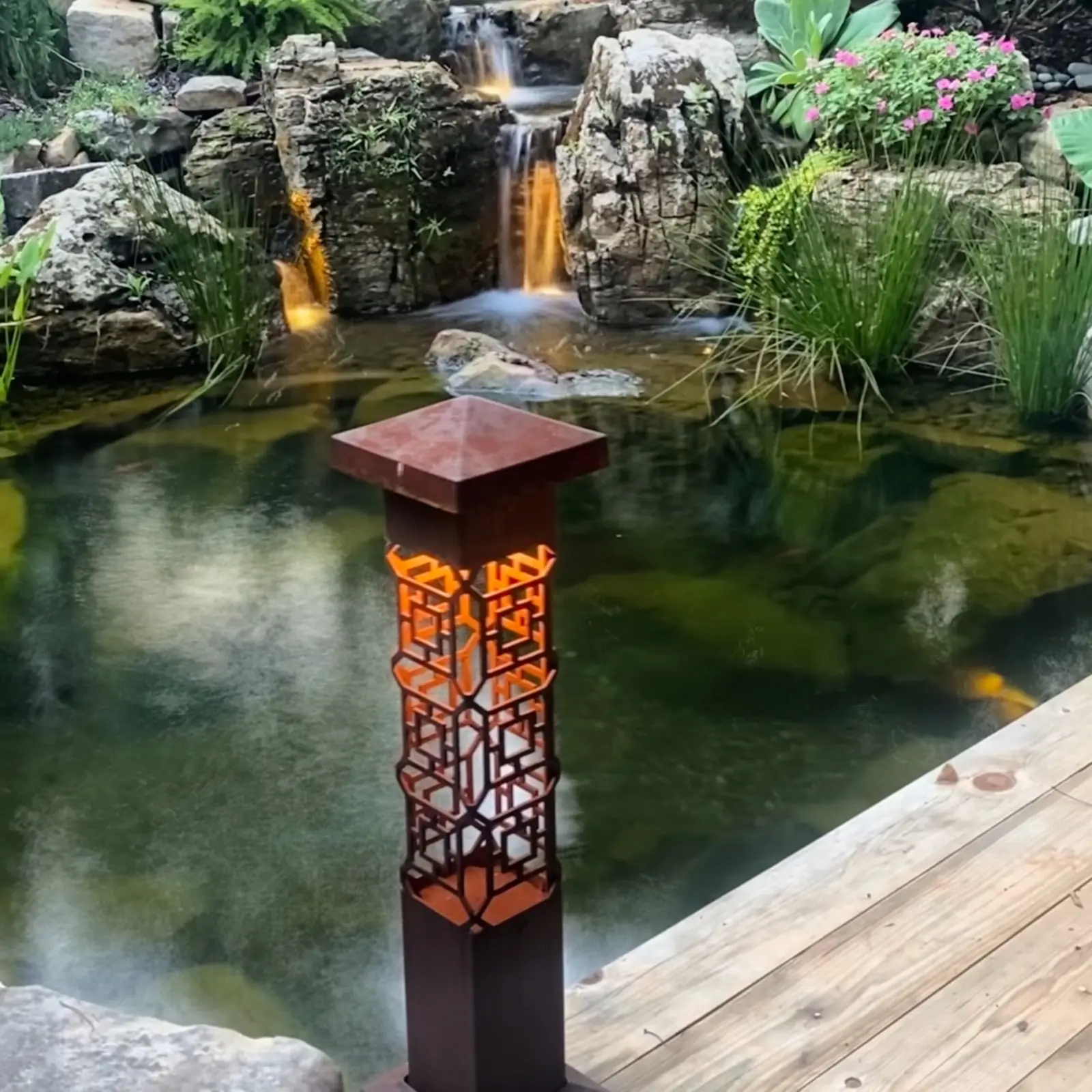
The site
What your property needs for a swim pond
We walk every site before we draw anything, and we will tell you plainly if a natural swimming pool is not the right fit. These are the things that matter most.
Room for two zones
You need space for the swim zone and the wetland filtration zone, plus setbacks and somewhere to walk around them. The wetland filtration zone is sized in proportion to the swim area. This is the one place we never shrink the design to save money, because an undersized filter is the most common reason a natural pool fails.
Sun
The wetland plants need light to do their work. A site in full shade under mature oaks will struggle, and heavy leaf drop from October into December adds organic load the system has to process. We place the pond and its intake around your canopy and prevailing leaf fall.
Slope and soil
A gentle slope can be an asset: it lets the wetland filtration zone sit slightly above the swim zone so water returns by gravity over the falls. Piedmont red clay holds its shape well for excavation but needs proper drainage planning around the pond. On some Gaston County lots, including around Belmont and Mount Holly, rock can appear at shallow depth, which affects how deep we can dig and what it takes to get there.
Access
Building a swim pond takes excavation equipment, stone deliveries and, often, trucked-in water. One of our recreational pond builds was filled with over 14,000 gallons delivered by water truck. We need a realistic route from the street to the site.
Sight lines and power
Where you see the water from inside the house matters as much as where it sits in the yard. The pump and any lighting also need electrical service, which we plan from the start.
Process
The project process
Building a natural swim pond is a project, not a catalog purchase. Every step is designed to feel like working with a craftsman, not a contractor.
The design conversation
A listening call with Brian. How your family lives, what draws you outside, what you have imagined but never found. No clipboard, no pressure toward a decision.
The site visit
We walk the land: slope, drainage, sun patterns, soil, access and the views from inside the house. This visit is complimentary.
The design
A proposal built for your property specifically, with imagery, a clear scope, a clear investment figure and a clear timeline.
The build
Brian is on site throughout. You get regular progress updates and photos, and you are asked before any decision that needs your input. Most builds complete in two to four weeks once on-site work begins.
The first season
A walkthrough of how your system works and what it will look like through each season, a care guide written for your build, and a 30-day check-in call scheduled before we leave.
The full journey, stage by stage, is laid out on the Signature experience page. Homeowners who begin the design conversation in late fall or winter tend to have the most flexibility for spring scheduling, because the planning stage is where the time is best spent.
Stewardship
Stewardship: ownership without the work
A swim pond asks far less of you than a pool. There is no weekly chemistry. Through the season, a skimmer basket gets emptied and plants get trimmed now and then. The one real task of the year is a spring cleanout of the pond floor and the filter.
Most of our clients hand all of that to us. The Signature Stewardship Program is an ongoing care relationship with the same team that built your pond, offered in two levels:
Essential Stewardship
Four seasonal visits a year, each with a water quality assessment, system inspection, minor adjustments and a written summary afterward.
Full Signature Care
Monthly visits year-round, aquatic plant management, water quality monitoring, priority scheduling between visits and an annual deep-service appointment.
Stewardship details are covered in your design conversation. You should be swimming, not managing.
Pricing
What a natural swimming pool costs
We do not publish a number for swim ponds, because there is no honest single number. Every project is shaped by its site. What we can tell you is that the build cost of a natural swim pond generally overlaps the range of a quality gunite pool. It is not the cheap option, and it is not wildly more than a well-built pool either.
What drives the investment:
Size and depth of the swim zone
More excavation, more liner, more stone.
The wetland filtration zone
Sized in proportion to the swim area. Never the place to cut corners.
Site conditions
Slope, Piedmont clay, shallow rock and access all affect the dig.
Waterfalls and streams
They oxygenate the water and give the pond its sound.
Decks, stone, lighting and planting
The setting that turns a pond into a place you live around.
Koi
Optional, and planned for from the start if you want them.
Over the years, the difference shows up in running costs: no chemicals to buy, no draining and refilling, and no resurfacing cycle. We walk through realistic figures for your property in the design conversation, with no guesswork and no surprises.
Projects
Proof: “The Resort”
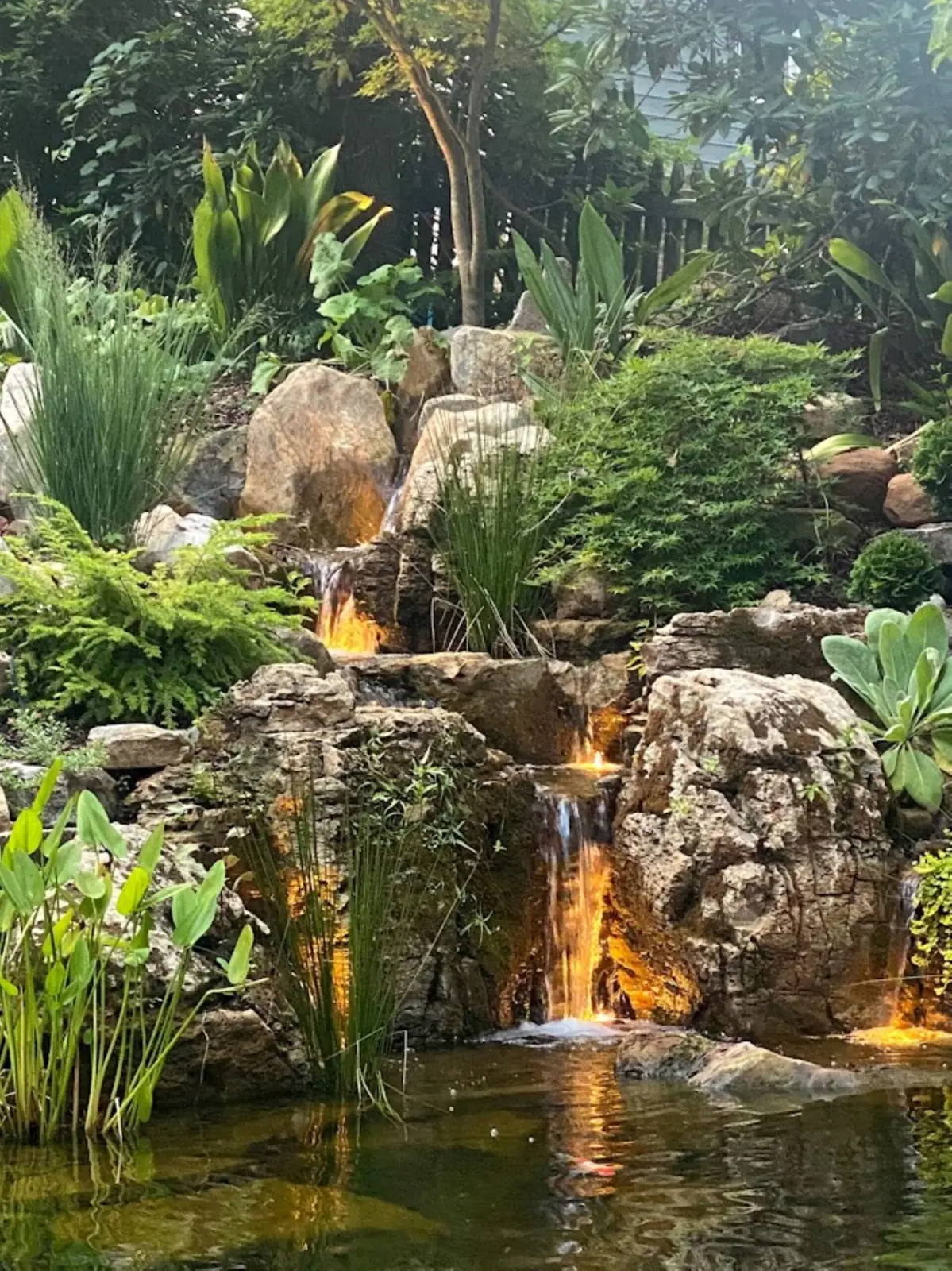
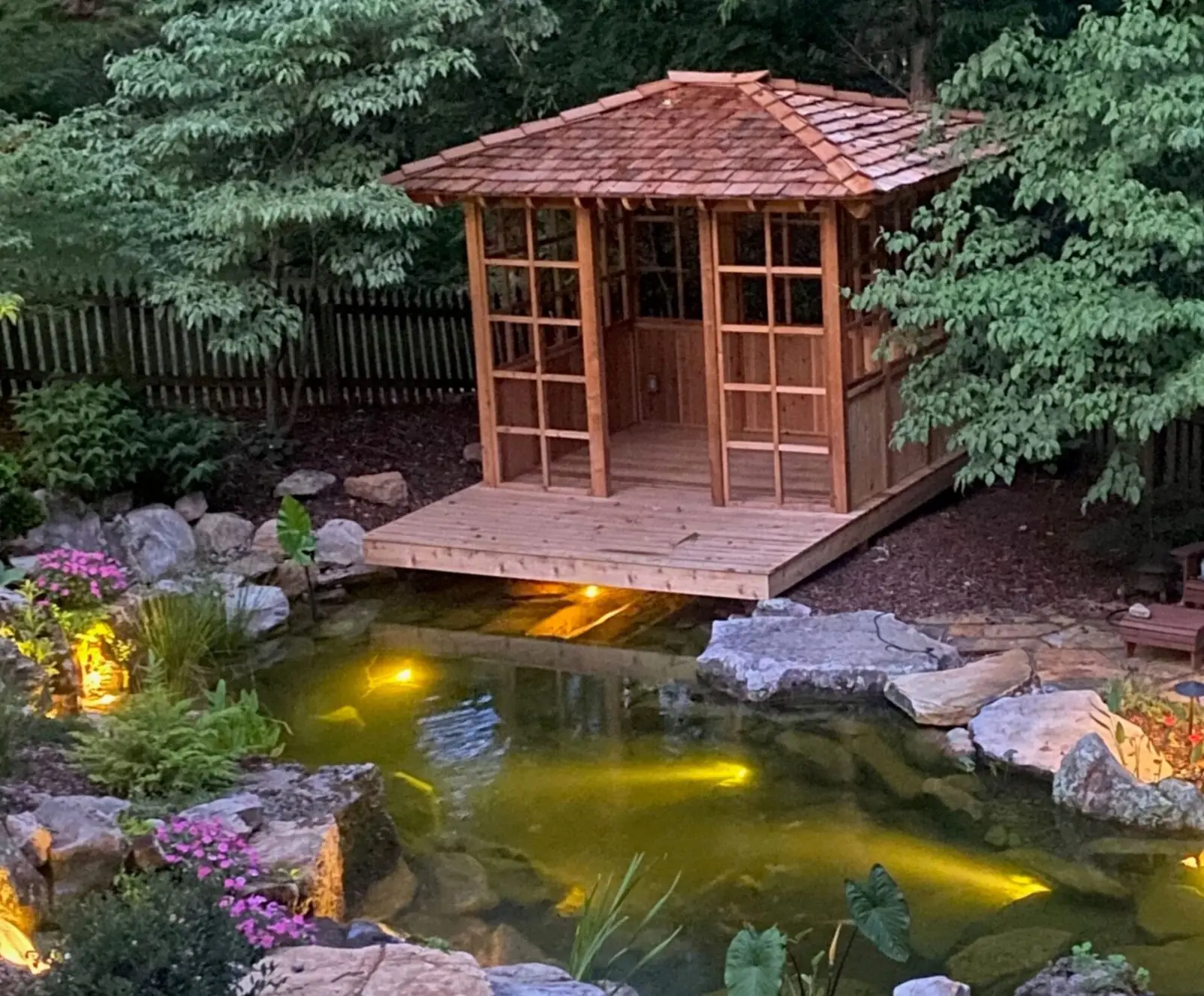
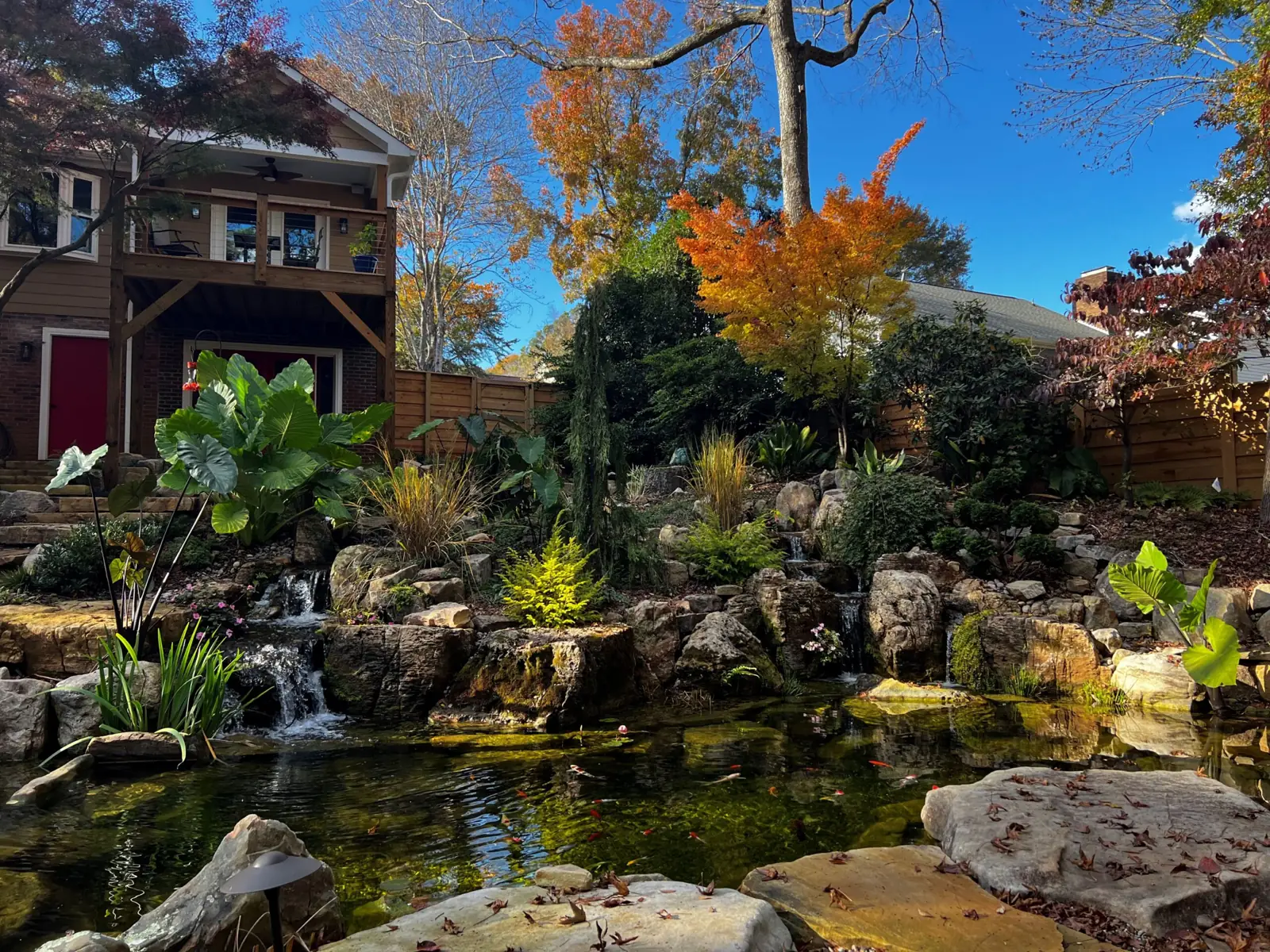
A family in Belmont, where we are headquartered, wanted a backyard where their grandchildren could swim with koi, climb on boulders and listen to falling water. We built a recreational swimming pond with varied depths for swimmers and fish, multiple waterfalls, stepping stones and moss-covered boulders for hands-on play, and Tennessee fieldstone mixed with weathered limestone.
The filter is a wetland filtration system with 16 AquaBlox beneath the gravel for water storage and biological filtration. Jets steer debris to an intake bay. Four decks look over the water, one with a Japanese maple growing up through the boards, along with a cedar Japanese tea house with rice-glass panels. The koi have hiding places under the decks and boulders, away from herons.
Asked which he liked better, a pool or a pond, five-year-old Decatur did not hesitate: "A pond."
Projects
Watch swim ponds take shape
Seeing the water move explains a natural pool better than any diagram.
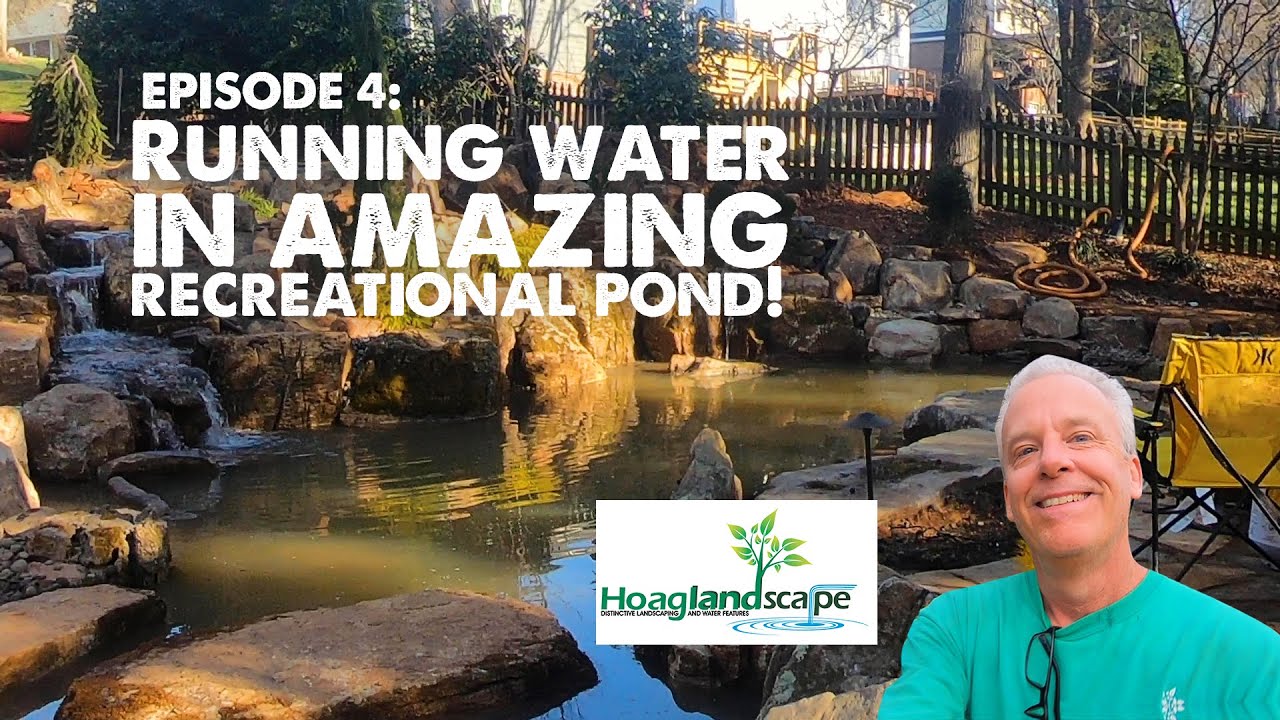
Running water in a recreational pond: the filtration pond, its limestone "bridal fall" and the finished falls in motion.
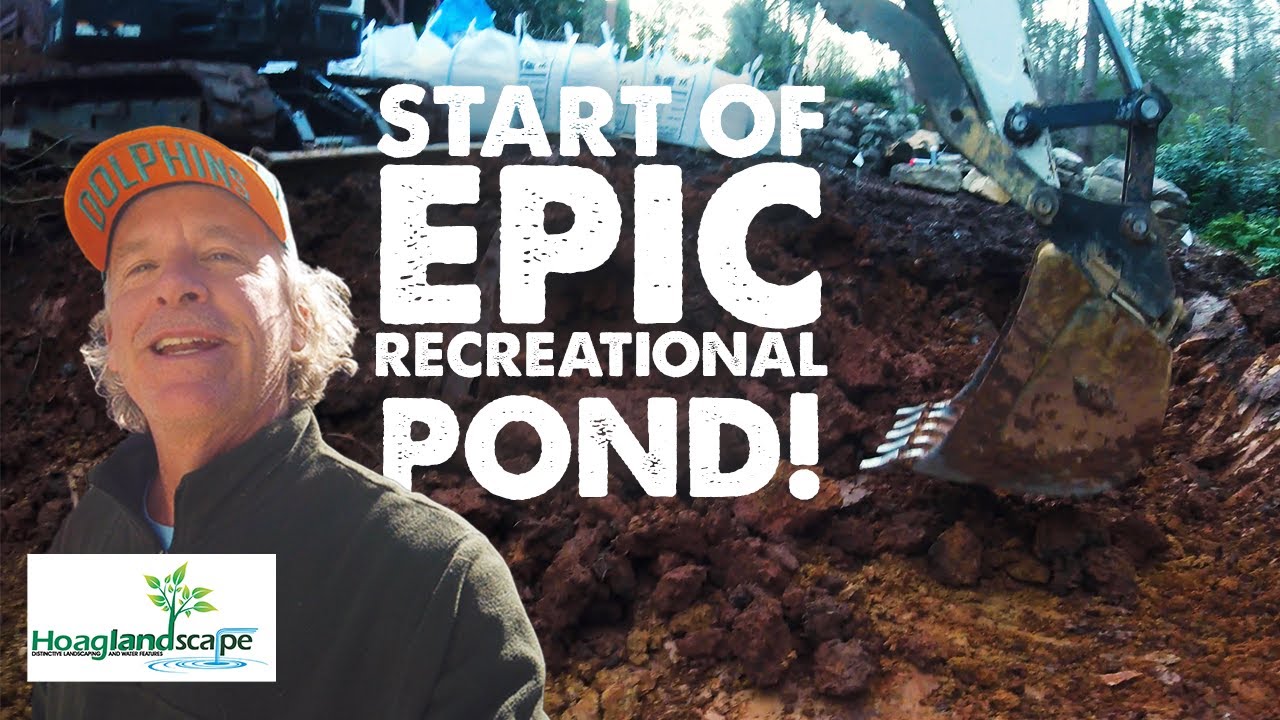
Day one of a recreational pond installation: layout and excavation as the build begins.
For a written walk-through of a build, read running water and lush landscapes on a recreational pond.
Guide
Swim pond guide
Still deciding? Two pages go deeper than this one.
What is a swim pond, and is one right for your property?
Our definitive guide covers natural filtration, what Charlotte's climate means for a swim pond, the lifestyle questions worth asking and when to start.
The Signature journey
shows what working with us looks like, from the first conversation to the first swim.
If you live on or near the lake, our post on swimming ponds at Lake Norman covers what lake-area homeowners ask.
Spring planning
Winter is design season
Winter is when swim ponds are designed. Begin your design conversation now and your swim pond can be ready to build first thing in spring.
Questions
Frequently asked questions
Yes, when it is designed and built correctly. Bacteria living on the gravel in the wetland filtration zone break down organic matter continuously, and aquatic plants take up the nutrients that would otherwise feed algae. Circulation keeps the water oxygenated and moves debris to an intake bay. We build to Aquascape's recreational pond specifications, which are written specifically for people swimming in the water.
Not if the wetland filtration zone is sized correctly and fully planted. Green water comes from unchecked nutrients, and a properly sized filter with enough plants starves algae of them. Some string algae on the rocks is normal and shows the ecosystem is working. We size the wetland filtration zone in proportion to the swim area for exactly this reason, and it is the one part of the design we will not shrink.
Yes, and for many families it is the favorite part. Koi fit naturally into the ecosystem. They need proper depth, good circulation, plant cover and places to retreat. At “The Resort,” the koi hide under decks and boulders, and the grandchildren swim alongside them. If you would rather not have fish, the pond works just as well without them.
Less than a conventional pool. There is no weekly chemistry. Through the season, someone empties a skimmer basket and trims plants now and then. The main task of the year is a spring cleanout of the pond floor and filter. Most clients hand all of it to our Signature Stewardship Program, which offers seasonal or monthly visits by the team that built the pond.
Realistically, May through October is the comfortable swimming season in the Charlotte area. The pond keeps running and looking good all year, waterfall included. Heating is possible but works against the biology that keeps the water clean, so most of our clients choose not to heat. If warm water in the shoulder months matters most to you, a heated pool may suit you better.
Enough for the swim zone, a wetland filtration zone sized in proportion to it, setbacks and room to walk around both. It is a meaningful footprint. We assess every site before proposing anything. If your lot is tight, we will tell you honestly whether a swim pond fits or whether a koi pond or waterfall would serve you better.
Most builds complete in two to four weeks once on-site work begins, depending on size, site conditions and the scope of decks and planting. The design and planning stage comes first and is where the time is best spent. Homeowners who start the design conversation in late fall or winter usually have the most flexibility for spring scheduling.
Sometimes. It depends on the size and depth of the existing pond, the condition of the liner and whether there is room to add a properly sized wetland filtration zone. In some cases a partial renovation is the right approach, and in others it makes more sense to start fresh. We can look at your pond during a complimentary site visit and give you a straight answer.
The landscape design is incredible, the swim pond is magical.
Google review, 2024
Get started
Begin your design conversation
You do not need a plan. You need a picture of how you want to live outside. Bring us that, and Brian will help you find out whether a natural swim pond is right for your property, from Lake Norman and Charlotte to Belmont, Mount Holly, Gastonia and Lake Wylie.